

Nusa Lembongan is famous for its diverse and healthy marine life. Including manta rays, Mola Mola (ocean sunfish), and numerous species of tropical reef fish. Other notable natives are sea turtles, sharks, various invertebrates like nudibranchs and shrimps, and colorful coral reefs.



Lembongan, Penida & Bali Marine life FAQ
How come the mysterious Salp is so mysterious?
The reason the mysterious Salp or Salps or Salpa is so mysterious is just because!

The chain of Salps as you can see on the picture and or video is called the “aggregate” stage, after it leaves the parent. The photo shows how they are attached, one to the other. The row of spots or things you see that look like a baby something is the stomachs of the Salps.
Each of the clone animals in each chain will then have a single baby of its own, grown from a fertilized egg, attached to its mother’s inside and nourished by the mother. After a while these babies grow large and are born, leaving their mothers to swim freely in the sea. But by this time, the mothers are already turning into males, and fertilize other salp eggs. When the single babies are fully grown (A fully grown Salp can be of 15 cm long), they will make long chains of cloned babies, just like their grandparents did.
What does the mysterious Salp eat?
Some say the mysterious Salp is also known as the ocean vacuum cleaner. The salp strains the pumped water through its internal feeding filters, feeding on the tiny phytoplankton. Phytoplankton is microscopic marine algae and gets their energy directly from the sun using photosynthesis, like plants. Zooplankton then feed on phytoplankton and is then eaten by larger zooplankton, fish and so on. Basically the mysterious Salp has the same diet and lunch menu as our mysterious Manta Rays!
What is a Salp or the mysterious sea monster?!
A salp (plural salps) or salpa (plural salpae or salpas is thanks to Wikipedia explained as a barrel-shaped, planktonic tunicate. The mysterious marine life Salp or Salps or Salpa are invertebrates; this means they do not have a spinal cord. The mysterious Salp live in cold oceans, coastal waters for their whole life span.
It moves by contracting, thus pumping water through its gelatinous body. You can compare it to jet propulsion! Basically a powerful forward movement produced by forcing gases backwards, as in a jet engine! And that way of movement of the Salp is one of the most efficient in the animal kingdom. How cool is that for our mysterious marine life discovery with Scuba Center Asia, just diving at one of the top 5 dive locations of Indonesia!
What Does a Clownfish Look Like?
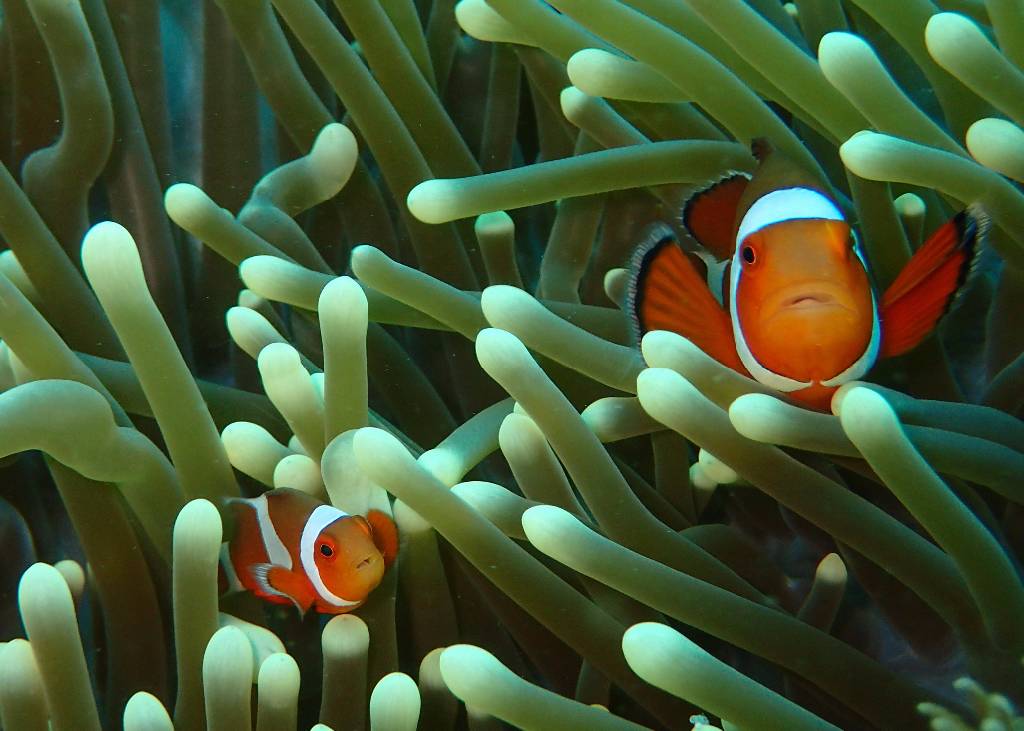
The most iconic clownfish species is the clown anemonefish (Amphiprion ocellaris), a small but brightly colored reef dweller. Typically, they measure 10–18 centimeters in length (3.9–7.1 inches), with an average weight of just a few grams. Despite their small size, their bright orange bodies, adorned with one to three white stripes, make them easy for divers to recognize.
But not all clownfish look like Nemo. Variations exist across the family Amphiprioninae. For example, the maroon clownfish is a stunning deep red, while others can be yellow, blackish, or reddish with unique patterns. Underwater magnification makes them appear up to 33% larger—a fun detail divers often notice on their first encounter.
Clownfish are sexually dynamic too. All clownfish are born male, but in a group, the dominant female leads the colony. If she dies, the largest male undergoes a complete sex change to take her place. Talk about underwater girl power!
Why Divers love Clownfish?
Divers adore clownfish for their color, charisma, and attitude. Few sights are as heartwarming as a bright orange Nemo darting through anemone tentacles. At Scuba Center Asia, our dive guides know the best places in Nusa Penida Marine Park to spot them, especially during calmer seasons when visibility is at its peak.
Diver etiquette:
- Keep your distance and avoid touching anemones.
- Control your buoyancy to protect fragile coral reefs.
- Be patient—great photos often come from waiting, not chasing.
Clownfish encounters are one of the reasons people fall in love with diving in Bali. They’re proof that small creatures can leave a huge impression.
Can You Eat Clownfish?
It’s one of the strangest questions we hear: Can you eat clownfish? Technically, yes—they are fish, after all. But they are small, bony, and not considered a food source. More importantly, their ecological and cultural value far outweighs any culinary interest. So, while you’ll find clownfish in aquariums and on diver’s bucket lists, you won’t find them on dinner plates.
Are Clownfish an endangered species?
Currently, most clownfish, including the common clown anemonefish, are listed as Least Concern on the IUCN Red List. However, they face growing threats:
- Habitat Loss: Coral reef destruction from climate change, bleaching, and coastal development.
- Overfishing & Bycatch: Clownfish are sometimes caught for the aquarium trade.
- Pollution: Rising plastic levels in oceans disrupt their ecosystems.
Protecting clownfish means protecting coral reefs—the vibrant underwater “mountain ranges” that support thousands of marine species. Diving responsibly is one way to help ensure they remain part of our oceans.
What is Clownfish’s role in the ecosystem?
Clownfish are more than just colorful reef decorations—they play a crucial role in marine ecosystems:
- Symbiosis with Sea Anemones: Their mucus-coated skin protects them from stings, while their constant movement aerates the anemone and cleans away debris.
- Attracting Prey: Predatory fish drawn to clownfish often fall victim to the anemone’s tentacles.
- Ecosystem Balance: By feeding on algae and scraps, clownfish help keep reef systems healthy.
Think of them as both housekeepers and gatekeepers of their small coral neighborhoods. Without them, anemones would be less effective hunters, and parts of the reef could struggle to stay balanced.
How Do Clownfish Live?
Clownfish may be small, but their daily life is anything but dull. Their lifestyle revolves around their sea anemone hosts:
- Feeding Habits: They nibble on plankton, algae, and leftovers from their host’s meals. Some species even eat dead tentacles of the anemone.
- Movement Patterns: Unlike schooling fish, clownfish are mostly homebodies. They rarely stray more than a meter from their host. You’ll see them darting in and out of tentacles, gliding restlessly, or hovering protectively over their eggs.
- Family Life: A female can lay 600–1,500 eggs at a time, which males guard fiercely. Eggs hatch in 6–10 days, usually at night.
- Aggression: Despite their size, clownfish can be territorial and will dart toward divers or photographers who get too close.
They don’t migrate long distances, but seasonal water conditions can affect their visibility and breeding cycles.
Where Do Clownfish Live?
Clownfish are native to the Pacific Ocean and the Red Sea, thriving across shallow coral reefs and lagoons. They live in symbiosis with sea anemones, their lifelong homes and protectors. You won’t find clownfish in the Atlantic Ocean—instead, they are restricted to warm tropical waters near mid-ocean ridges, island chains, and even along certain mountain range-like reef systems beneath the sea.
In Nusa Penida Marine Park in Bali, clownfish are often spotted at dive sites like Crystal Bay, Manta Point, and Toyapakeh. They prefer sheltered reef slopes between 1–18 meters in depth, where water visibility is high, currents are mild, and temperatures hover between 26–29°C (78–84°F). Whether you’re snorkeling or scuba diving, you’re almost guaranteed to spot these charismatic little fish.
Can I dive with mantas?
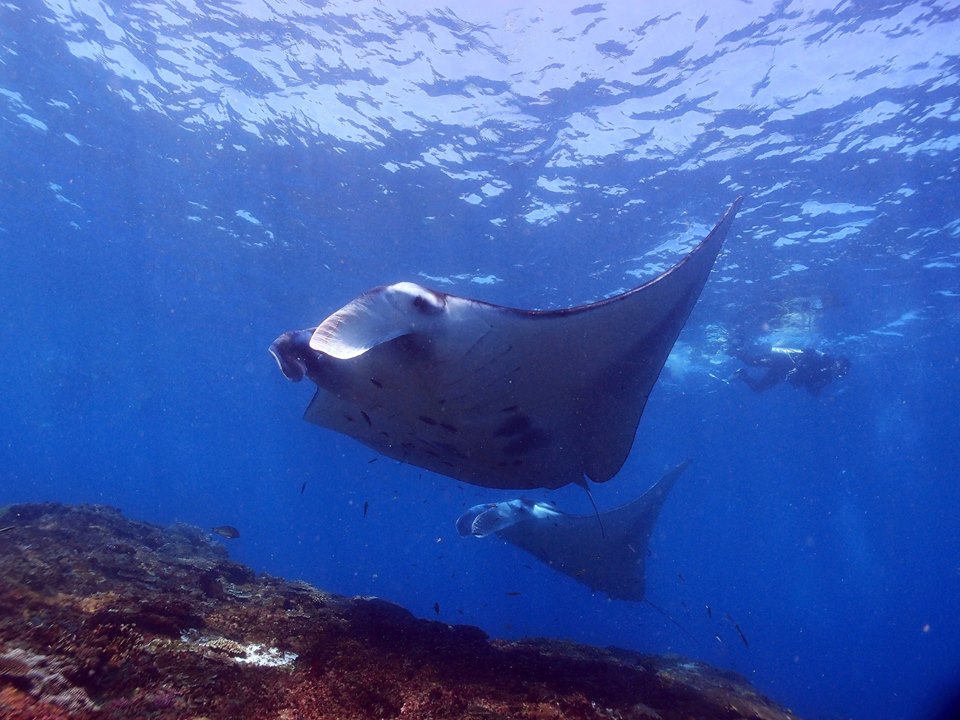
Yes, with your Open Water Diver certification you can dive with mantas at manta point & have beautiful manta rays encounters. Although…if you haven’d dives in over 12 months a refresher is required.
Are the mantas deep?
Surprisingly, no! Here at Manta point you can even see manta’s from the boat on the surface.
What is a cleaning station?
A specific area on a coral reef or rocky outcrop where manta rays congregate to be cleaned by smaller fish like wrasses and gobies.
Is Mola Mola dangerous?
While the fish does not pose danger to swimmers, they can land on boats and due to their big size this can cause injuries. The fish breaches to knock off parasites from its body, which is the only danger it poses.
How fast does the Mola Mola grow?
The growth of this creature is simply amazing. While they begin life as tiny larvae, they grow rapidly to reach their enormous size. The fact that they have few vertebrae makes it possible for the fish to grow rapidly up to its enormous adult size. The heaviest of these bony fish has been recorded to weight 2300kg.
Do Mola Mola bask on the surface?
This has been a misconception for long though studies now show that the fish does not necessarily come to the surface to recharge lost energy. Research has shown that while the fish normally spends much of the time above 200 meters, it can dive down to 800 meters. The term ocean sunfish has grown out of the misconception that the Mola Mola has to bask so as not to die.
Where to find the Mola Mola?
Tropical and temperate waters provide the best habitat for this fish. In areas, such as Indonesia around Nusa Lembongan and Penida, Europe around Italy and Malta, this fish has been sighted though they are rarely seen. Its rarity makes it even more interesting and divers are always overjoyed just spotting one these gargantuan creatures.
What is the actual difference between the Ocean Sunfish and the Mola mola?
In different studies of the Ocean Sunfish family, there are three different species.
1. The Ocean Sunfish is also known as the Mola Mola.
2. The Mola Alexandrini or Southern Sunfish. This is the one you can find here diving in Nusa Lembongan and Nusa Penida.
3. The Mola Tecta is also known as the Hoodwinker Sunfish.
They vary a bit in appearance but they all have a circular shape in common. There are a lot of myths and legends about the Mola and why their different names occurred. Because the Mola spends most of their lifetime on deep depths, it is hard for humans to study them in-depth.
Diving with us in Lembongan in the period April – September will almost guarantee you of seeing a Mola! If you dive many days that is! But then again, there is also a huge luck factor and timing the right place and time for a dive. They are there! Imagine you do your Divemaster course with us. You will stay and do your diving training with us, you will guarantee to see them more than once!
What do Mola’s eat?
The Mola loves to eat jellyfish, lots of them! On a daily basis, they are busy with a searching strategy to consume large amounts of jellyfish. Jellyfish are low in calories and nutrients, so the Mola needs to consume a whole lot to get enough. As a part of a searching strategy to find the jellyfish, the Mola has the same migrating journey as a jellyfish.
Can Mola Mola jump?
Imagine, you are relaxing after your first dive at Crystal Bay on the boat. A nice ocean breeze makes your hair dance in the sun and you are holding a nice cup of coffee. A giant round-looking fish jumps more than a half meter in the air next to you…. Say hi to the famous Mola!
A jumping Mola? Does that exist? The answer is yes!
The reason that they jump is that it tries to splash the parasites off its skin. This is one of the reasons the Mola comes to shallow waters like Crystal Bay. Another reason is that Crystal Bay neighbours a deep channel where the Mola Mola can is at depth. During the period April-September we have regular sightings of the Mola! This is because of upwelling. In other words, colder waters from the deep come to a shallower depth. This is when you as a scuba diver can actually meet them underwater while diving! The dive sites Crystal bay and Toyapakeh in Nusa Penida are famous! These are the cleaning stations, where Bannerfish gathers, to clean the Ocean Sunfish. That makes Nusa Lembongan and Nusa Penida the ideal diving spot for seeing the Mola.
The Ocean Sunfish, a.k.a Mola name is after the sun, why is that?
At first sight of the Mola, you think that it is its round shape that looks like the sun. But it’s actually because it is a keen sunbather:
- This big fish is swimming at depths of 200 meters, where the water temperature drops to around 4-5 degrees. So being at that depth for some time explains that it needs some sunbathing and to warm up its body.
- While sunbathing at the surface, seagulls help the Mola mola get rid of parasites. In other words, a proper Spa-day! Plus the shape of the Ocean Sunfish looks like a little sun!