
Clownfish

9 weird facts and underwater photography secrets | The Real-Life Nemo of the Coral Reefs

If you’ve ever watched Finding Nemo, you already know the world’s most famous clownfish: a little orange hero with white stripes, darting bravely between sea anemones. But there’s far more to clownfish than Hollywood magic. From their unique relationship with sea anemones to their powerful role in marine ecosystems, these fish are among the most fascinating creatures on Earth’s surface. And yes—many divers still ask, “Can you eat clownfish?” (Spoiler: you probably wouldn’t want to!)

In this article, we’ll dive deep into clownfish facts, covering everything from their appearance, habitats, and quirky behaviors to their conservation story. Along the way, we’ll reveal the best spots in Bali’s Nusa Penida Marine Park to see them in the wild with Scuba Center Asia.

Frequently asked questions about Clownfish

What Does a Clownfish Look Like?

Where Do Clownfish Live?

How Do Clownfish Live?

What is Clownfish’s role in the ecosystem?

Are Clownfish an endangered species?

Can You Eat Clownfish?

Why Divers love Clownfish?

Appearance: What Does a Clownfish Look Like?

The most iconic clownfish species is the clown anemonefish (Amphiprion ocellaris), a small but brightly colored reef dweller. Typically, they measure 10–18 centimeters in length (3.9–7.1 inches), with an average weight of just a few grams. Despite their small size, their bright orange bodies, adorned with one to three white stripes, make them easy for divers to recognize.

But not all clownfish look like Nemo. Variations exist across the family Amphiprioninae. For example, the maroon clownfish is a stunning deep red, while others can be yellow, blackish, or reddish with unique patterns. Underwater magnification makes them appear up to 33% larger—a fun detail divers often notice on their first encounter.

Clownfish are sexually dynamic too. All clownfish are born male, but in a group, the dominant female leads the colony. If she dies, the largest male undergoes a complete sex change to take her place. Talk about underwater girl power!

Habitat & Location: Where Do Clownfish Live?

Clownfish are native to the Pacific Ocean and the Red Sea, thriving across shallow coral reefs and lagoons. They live in symbiosis with sea anemones, their lifelong homes and protectors. You won’t find clownfish in the Atlantic Ocean—instead, they are restricted to warm tropical waters near mid-ocean ridges, island chains, and even along certain mountain range-like reef systems beneath the sea.

In Nusa Penida Marine Park in Bali, clownfish are often spotted at dive sites like Crystal Bay, Manta Point, and Toyapakeh. They prefer sheltered reef slopes between 1–18 meters in depth, where water visibility is high, currents are mild, and temperatures hover between 26–29°C (78–84°F). Whether you’re snorkeling or scuba diving, you’re almost guaranteed to spot these charismatic little fish.

Behavior & Lifestyle: How Do Clownfish Live?

Clownfish may be small, but their daily life is anything but dull. Their lifestyle revolves around their sea anemone hosts:

  • Feeding Habits: They nibble on plankton, algae, and leftovers from their host’s meals. Some species even eat dead tentacles of the anemone.
  • Movement Patterns: Unlike schooling fish, clownfish are mostly homebodies. They rarely stray more than a meter from their host. You’ll see them darting in and out of tentacles, gliding restlessly, or hovering protectively over their eggs.
  • Family Life: A female can lay 600–1,500 eggs at a time, which males guard fiercely. Eggs hatch in 6–10 days, usually at night.
  • Aggression: Despite their size, clownfish can be territorial and will dart toward divers or photographers who get too close.

They don’t migrate long distances, but seasonal water conditions can affect their visibility and breeding cycles.

Role in the Ecosystem: Nature’s Tiny Guardians

Clownfish are more than just colorful reef decorations—they play a crucial role in marine ecosystems:

  • Symbiosis with Sea Anemones: Their mucus-coated skin protects them from stings, while their constant movement aerates the anemone and cleans away debris.
  • Attracting Prey: Predatory fish drawn to clownfish often fall victim to the anemone’s tentacles.
  • Ecosystem Balance: By feeding on algae and scraps, clownfish help keep reef systems healthy.

Think of them as both housekeepers and gatekeepers of their small coral neighborhoods. Without them, anemones would be less effective hunters, and parts of the reef could struggle to stay balanced.

Conservation Status: Are Clownfish in Danger?

Currently, most clownfish, including the common clown anemonefish, are listed as Least Concern on the IUCN Red List. However, they face growing threats:

  • Habitat Loss: Coral reef destruction from climate change, bleaching, and coastal development.
  • Overfishing & Bycatch: Clownfish are sometimes caught for the aquarium trade.
  • Pollution: Rising plastic levels in oceans disrupt their ecosystems.

Protecting clownfish means protecting coral reefs—the vibrant underwater “mountain ranges” that support thousands of marine species. Diving responsibly is one way to help ensure they remain part of our oceans.

Can You Eat Clownfish?

It’s one of the strangest questions we hear: Can you eat clownfish? Technically, yes—they are fish, after all. But they are small, bony, and not considered a food source. More importantly, their ecological and cultural value far outweighs any culinary interest. So, while you’ll find clownfish in aquariums and on diver’s bucket lists, you won’t find them on dinner plates.

Diver’s Connection: Why Divers Love Clownfish

Divers adore clownfish for their color, charisma, and attitude. Few sights are as heartwarming as a bright orange Nemo darting through anemone tentacles. At Scuba Center Asia, our dive guides know the best places in Nusa Penida Marine Park to spot them, especially during calmer seasons when visibility is at its peak.

Diver etiquette:

  • Keep your distance and avoid touching anemones.
  • Control your buoyancy to protect fragile coral reefs.
  • Be patient—great photos often come from waiting, not chasing.

Clownfish encounters are one of the reasons people fall in love with diving in Bali. They’re proof that small creatures can leave a huge impression.

9 weird & fun Clownfish Facts that might surprise you

  1. Hollywood Fame: The species Amphiprion ocellaris became the face of Finding Nemo, making it one of the most famous fish in the world.
  2. Color Diversity: Not all clownfish are orange; some are maroon, yellow, or even nearly black.
  3. Geographic Limitations: Despite covering 70% of Earth’s surface, oceans don’t distribute clownfish everywhere—they’re absent from the Atlantic.
  4. Hierarchy System: Only the top-ranking female reproduces, while males remain subordinates until her death.
  5. Egg Guardians: Male clownfish fan their eggs with their fins to oxygenate them, showing some of the best paternal care in the fish kingdom.
  6. Photography Challenge: Their darting, restless nature makes them one of the trickiest reef fish to photograph.
  7. Diet Oddity: Some clownfish are known to snack on their host’s tentacles!
  8. Magnified Illusion: Underwater, divers often think clownfish are bigger than they are thanks to refraction.
  9. Nemo’s Cousins: There are over 30 recognized species of clownfish worldwide, each with slightly different looks and habitats.
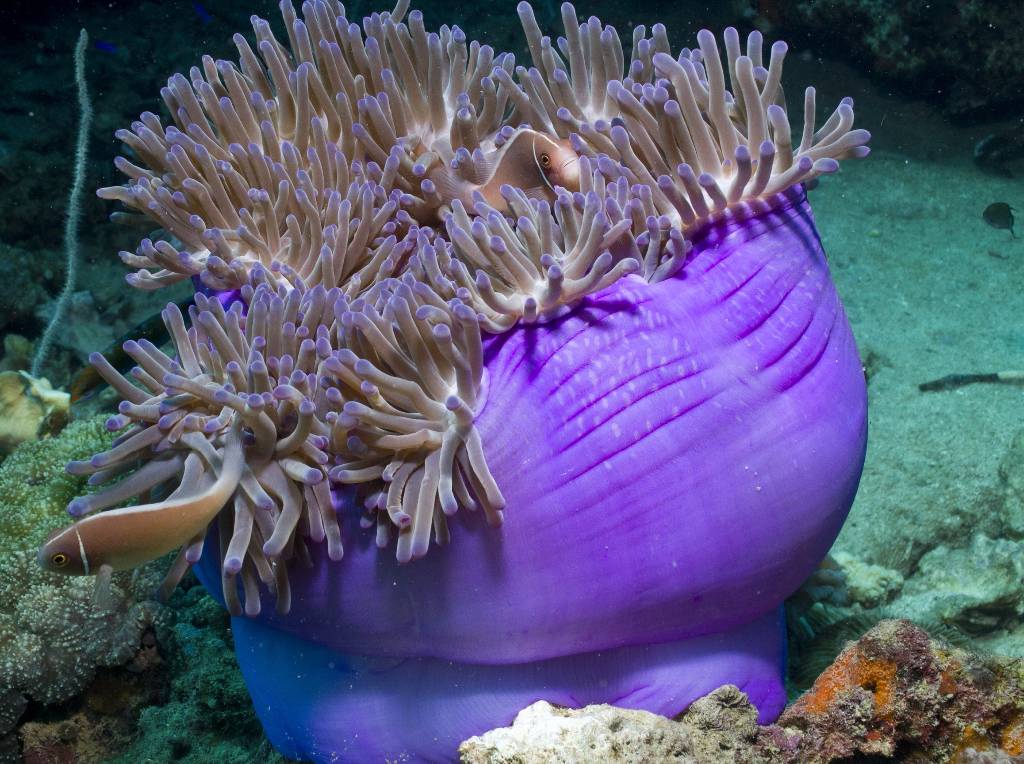
Last but not least Fact of the Clownfish

  • In a group of clownfish the largest and most aggressive female is found at the top (yes girlpower underwater!)  and they change sex without at some point in life?! This means that they are born male and when they get mature, they become females. If the female anemonefish is removed from the group, for example by death, one of the largest and most dominant males will become a female. The remaining males will move up a rank in the hierarchy.

The Art of Nemo Photography

Taking pictures of the clownfish can be very difficult, especially because they are easy to excite as you approach and will dart around quite a bit.  If they have eggs, they can be even more aggressive.  The eggs are golden beads which are hidden under the anemone’s skirt and you may even see a clownfish blowing her eggs to aerate them.

The Nemo Photography Skill

You may need to use your 60mm macro lens and do so on DSLR cropped frame. If you are using the DSLR Camera on full-frame, consider using the 105 or 100mm lens.  A compact camera will do well with a native lens but because they move so fast, shutter lag may be a problem.

Ambient light does not work when shooting anemone fish because of how fast they move.  Use 2 strobe lights and let the light freeze them first. You want to increase your cameras f-stop number. With a DSLR camera, start at f22 and with a compact you may only get to f8.
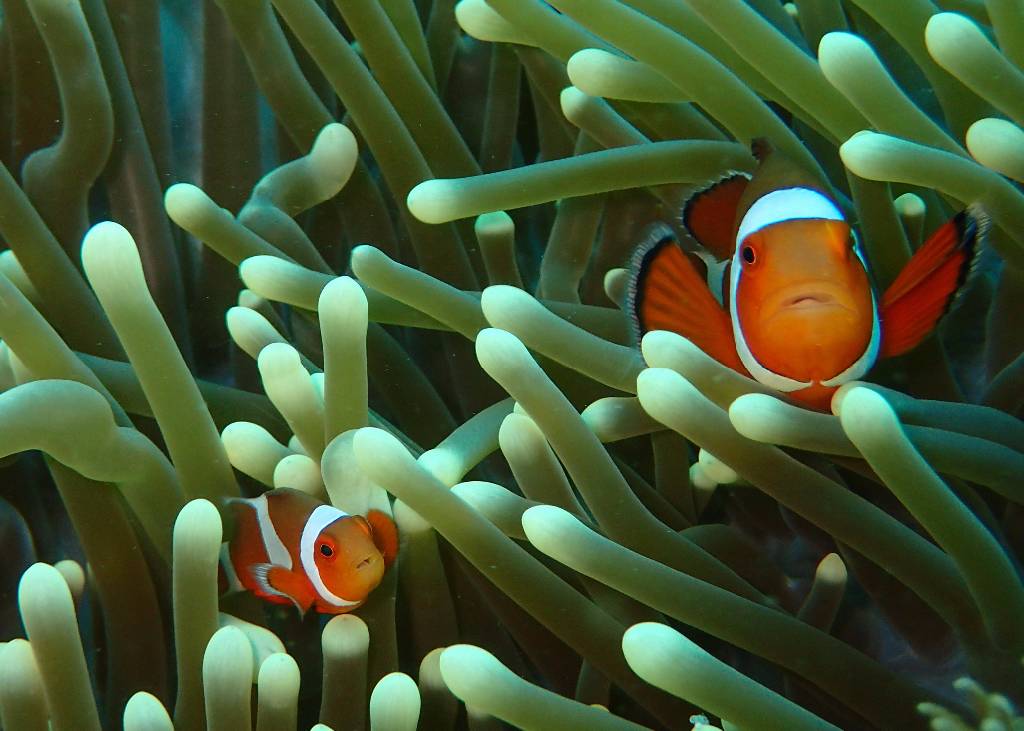
To get an excellent depth of field, you need to have a closed aperture and with this you will be able to get a large area in focus.  This is particularly important if you will be using the 100mm lens but if you are using the 60mm, you may be better off.

I am sure you want to bring out those rich colors.  For this, you will need to take your ISO real low.  Make sure that it is not on auto. If you will be using 2 strobe lights, dong this will be easy. Your shutter speed will need to stay at 1/60s. However, it is important for you to look at the pictures you have taken and adjust if you need to.

nemo photography, anemone fish

Discover Clownfish with Scuba Center Asia

The magic of clownfish is best experienced underwater, not on screen. Diving with us in Nusa Penida Marine Park gives you front-row seats to this vibrant spectacle. Whether it’s the classic white stripe of Nemo or the deep red hues of a maroon clownfish, you’ll witness one of the most fascinating fish facts of all: nature’s ability to surprise and delight.

Interested to learn even more? Be sure to check out our AWARE Fish Identifiction or PADI Digital Underwater Specialty Program and never miss a shot again!

Clownfish hotspot

Dive sites

There are no guarantees but these dive sites usually have a good chance of spotting one, or a few…

Book your dive with Scuba Center Asia today!

Let’s go Diving Lembongan