
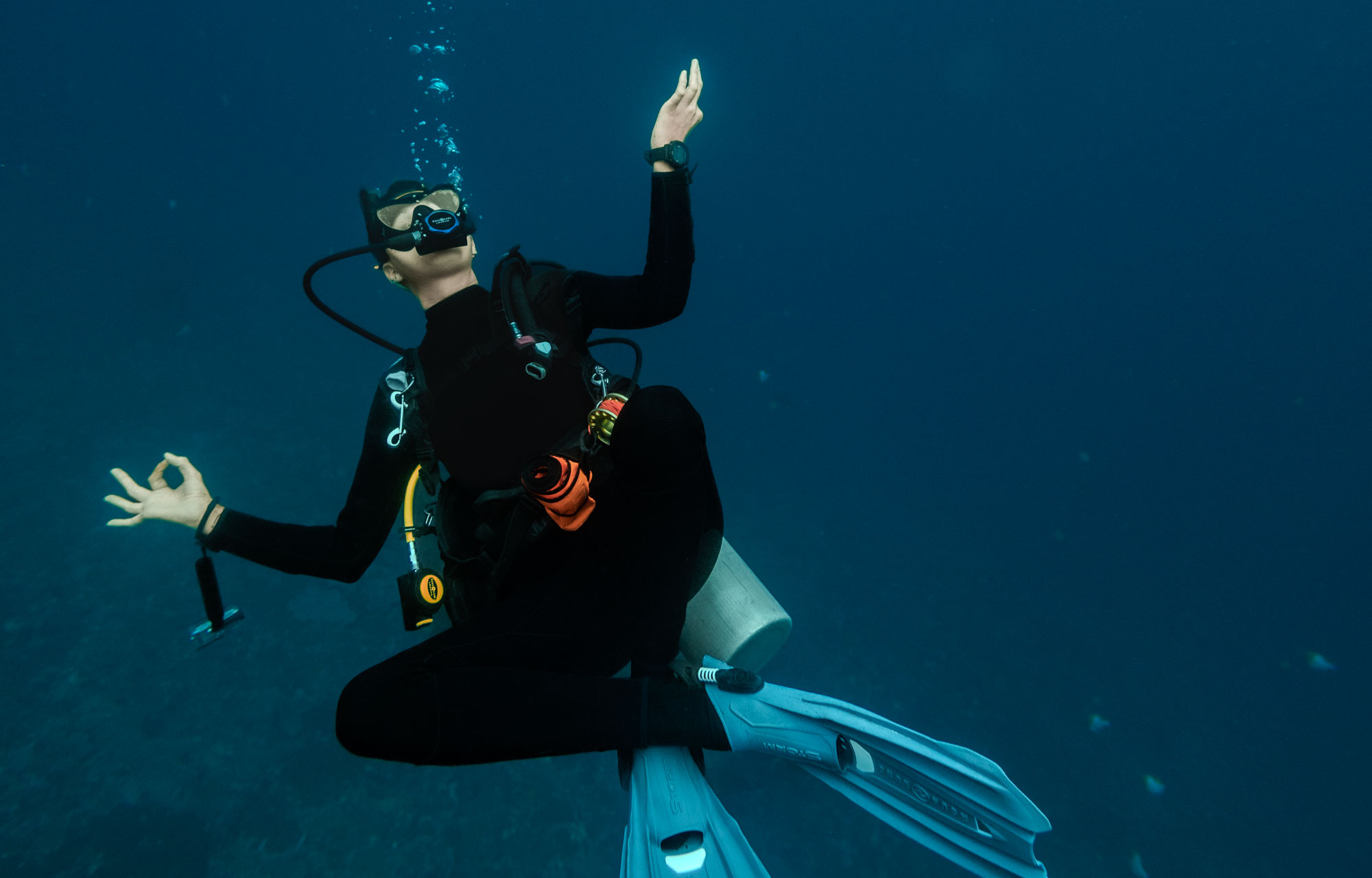
THREE common mistakes new and first-time divers tend to make. These can make you feel more uncomfortable and make scuba diving feel WAY harder than it actually is.
Breathing too fast and too shallow 😮💨
We always recommend slow, deep breathing (diaphragmatic breathing).
Not only does this physically calm your mind and help you stay in control, but it’s also a super important skill when it comes to buoyancy. When you take a full breath in, there’s a slight delay of a couple of seconds before you start to rise. When you breathe out, a couple of seconds later you begin to fall.
Breathing deep and slow helps you get used to this sensation and makes it much easier to manoeuvre underwater.
Too much weight
This usually shows up around dive 2, 3 or 4 on the Open Water Course. Students often ask for more weight because they feel “too buoyant”, but this is usually linked to breathing again. Fast, shallow breaths will keep you much more floaty than calm, deep breaths in and out. This all comes with practice though, especially if you’re not super confident in the water just yet. Totally normal.
Overkicking
Overkicking is a natural response if you’re used to swimming or treading water, but in scuba diving you want long, slow kicks.This conserves energy, helps your air last longer, and makes the whole dive way more enjoyable.
Overkicking can also come back to buoyancy, so make sure your breathing is in check and you’re properly weighted.
Keep breathing, weights, and kicking in mind during your Open Water Course or on your next dive.