
Diving Nusa Penida: The Safety Questions Nobody Thinks to Ask
Nusa Penida is extraordinary.
Strong currents bring nutrient-rich water to the reefs. Cold-water upwellings create the conditions associated with encounters with Mola. Manta rays visit cleaning stations around the southern coastline. And on the right day, some of the diving here is difficult to describe without sounding exaggerated.
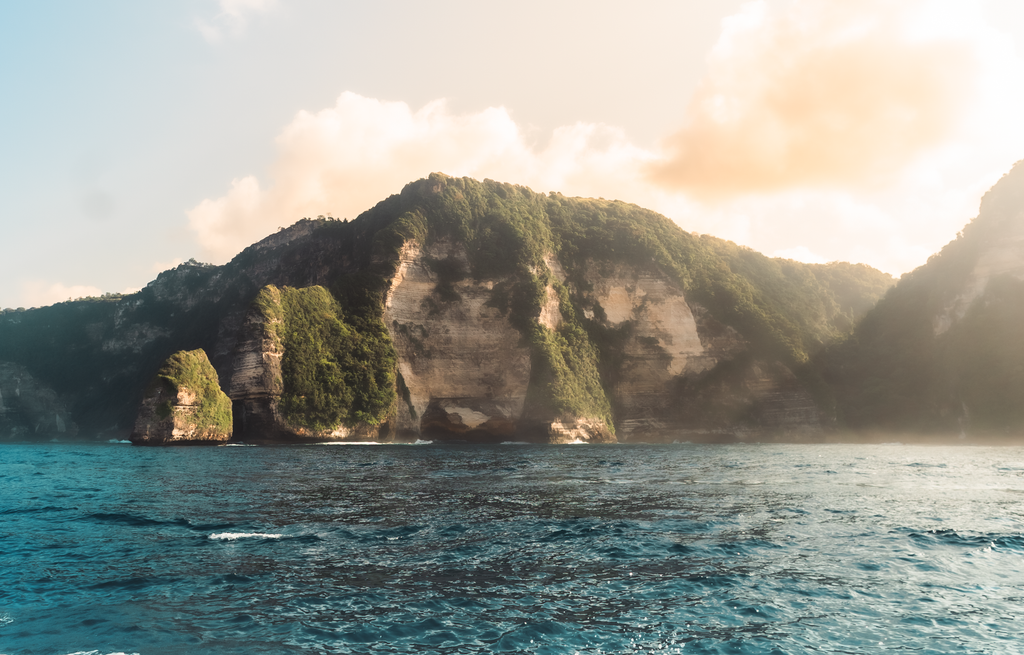
But the same ocean that makes Nusa Penida spectacular also deserves respect.
Nusa Penida Safety lately in the news
Recently, Nusa Penida has appeared in international and Indonesian news for several serious incidents. In September 2026, an Australian visitor died after falling from the cliffs at Kelingking Beach. Four days later, a Malaysian scuba diver died following an emergency during a dive at Crystal Bay. Indonesian police subsequently stated that the exact cause of the diving fatality remained under investigation.
These were different incidents, under very different circumstances. They should not be combined, simplified, or used to suggest that Nusa Penida itself is inherently unsafe.
But they should make all of us working in tourism stop for a moment and ask an important question:
Are we doing enough to help visitors understand the difference between adventure and unnecessary risk?
For scuba divers, that conversation starts long before entering the water. It starts with choosing the people you trust to take you there.
Nusa Penida isn’t a swimming pool, and that’s why we love it
The waters around Nusa Penida, Nusa Lembongan and Nusa Ceningan are influenced by moving water, changing tides, swell, thermoclines and local current patterns.
Conditions can change. Sometimes quickly.
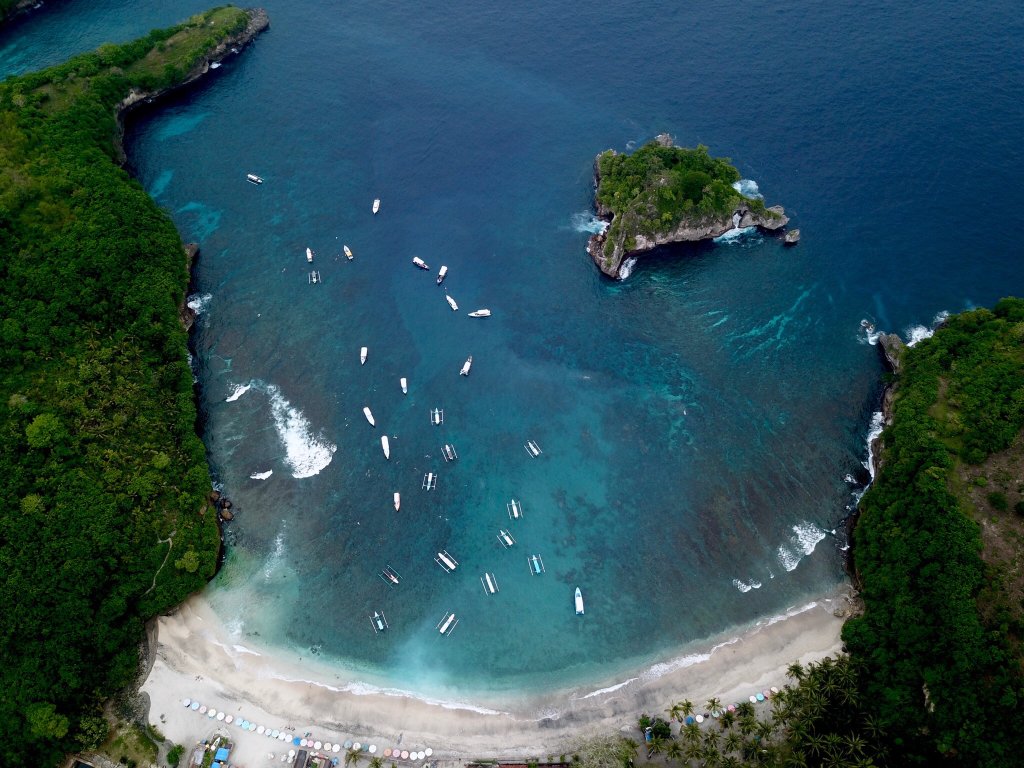
Crystal Bay, for example, can offer beautiful conditions inside the bay while stronger currents occur around other parts of the site.
Localised strong currents and downcurrents are among the reasons experience, local knowledge and sensible dive planning matter here. That does not mean Crystal Bay is a “dangerous dive site.” It means that conditions need to match the people entering the water.
That distinction is important. A dive site isn’t simply “safe” or “unsafe.”
The better question is:
Is this dive suitable for this diver, with this group, under these conditions, today?
A professional operation should be making that assessment continually. Not only when the booking is accepted or only when the boat leaves. And certainly not only after something has already gone wrong.
The way we approach your diving day with us at Scuba Center Asia.
The Most Important Part of Dive Safety Is Often Invisible
When choosing a dive center, most guests understandably compare the things they can see.
- Equipment.
- Boat.
- Price.
- Reviews.
- Dive sites.
- Maybe the certification agency logo on the wall.
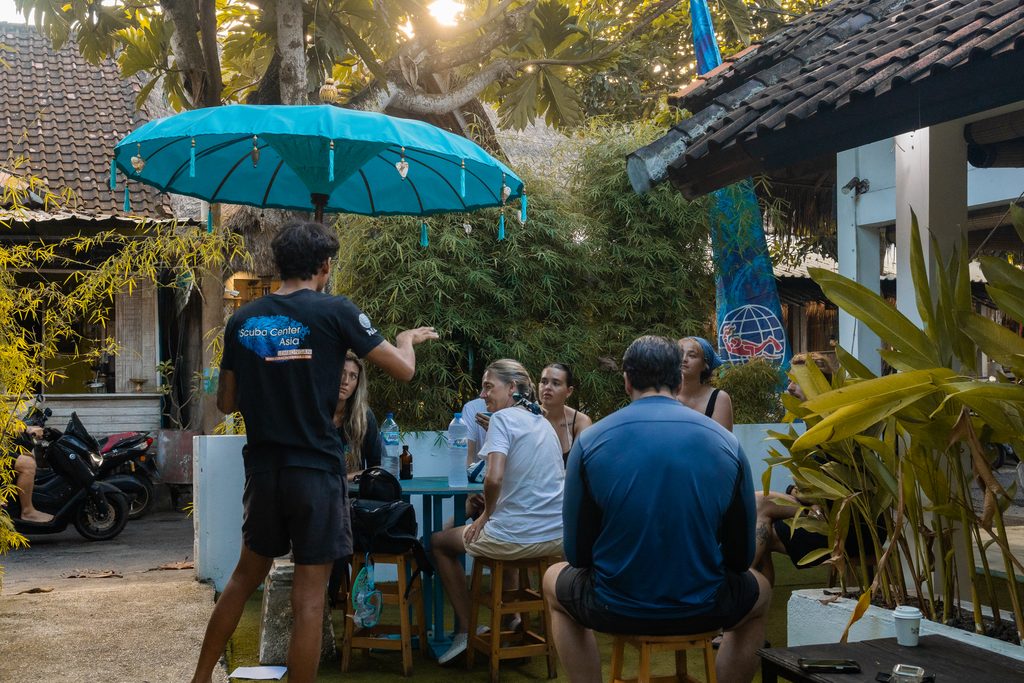
All useful information. But some of the most important indicators of a professional operation are much harder to see online. They happen behind the scenes.
Who decides where the group dives?
- Is the site selected because it suits the divers and today’s conditions?
- Or simply because that was the site promised yesterday?
How are divers grouped?
- Does experience actually matter?
- Or does everyone who fits on the boat become one group?
Can the dive professional change the plan?
This one is the most important. Can an instructor or Divemaster say:
“Conditions aren’t right for this group today. We’re going somewhere else.”
And will the operation support that decision?
That is a good safety culture.
Sometimes the Most Professional Answer Is “Not Today”
There is commercial pressure in diving:
- A guest has travelled halfway around the world hoping to see a Mola.
- Someone booked Manta Point dive site.
- The boat is already fuelled.
- The schedule says Manta Point and Crystal Bay.
- Customers have expectations.
Dive centers are businesses and need to make money. There is absolutely nothing wrong with that.
Profit is not the problem.
The problem starts when delivering the product becomes more important than making the right decision.
Sometimes the best professional decision is disappointing.
Not today.
Or did you hear one of these at a dive center you booked a trip with:
- We’re changing the site due to weather conditions.
- Looking at your experience, we plan you with another group.
- We recommend a refresher first.
- The current isn’t appropriate.
- We’re ending this dive.
These are all examples of excellent dive management. Not bad customer service.
Small Groups Are Not Just About Better Service
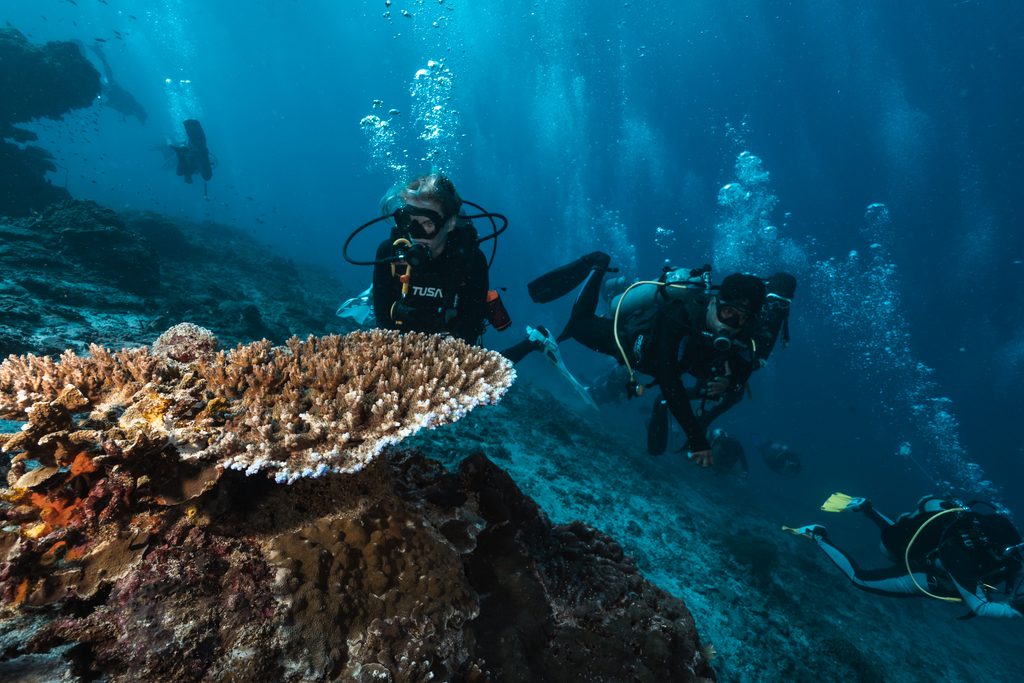
Group size is one of the easiest things for a diver to ask about before booking. At Scuba Center Asia, we keep our certified-diver groups to a maximum of four divers per guide.
We don’t do that because four is a magical safety number. We do it because supervision requires attention. Think about what a good dive professional is processing underwater:
- Where is each diver?
- Are they staying close to their buddy?
- What is their breathing pattern telling me?
- How much air do they have?
- Why is this diver suddenly changing depth?
- Is the diver struggling with buoyancy or doesn’t feel comfortable?
- What is the current doing?
- What is the water temperature / Is somebody cold?
- Why is this diver not staying close to me?
Now add another four people to this group…
Note: Large groups do not automatically mean unsafe diving. Small groups don’t automatically guarantee safe diving either.
But supervision has limits.
The more complex the conditions become, the more important it becomes that the person leading the dive has the capacity to actually observe the people they are responsible for.
For us, that is one of the reasons our certified diving trips use small groups.
A guide should actually be able to guide
A good dive professional should not spend the entire dive racing ahead looking for marine life.
The “taking care” already starts as soon as the guest enters the dive center and steps onto the boat.
What is their behaviour? Do they listen to the briefings? Do they understand how to set up their own gear, etc?
Underwater, while diving, they should be looking back. Watching the group. Checking gas, buoyancy, position, and breathing. Noticing when somebody is falling behind or suddenly behaves differently. Great guiding can sometimes look uneventful.
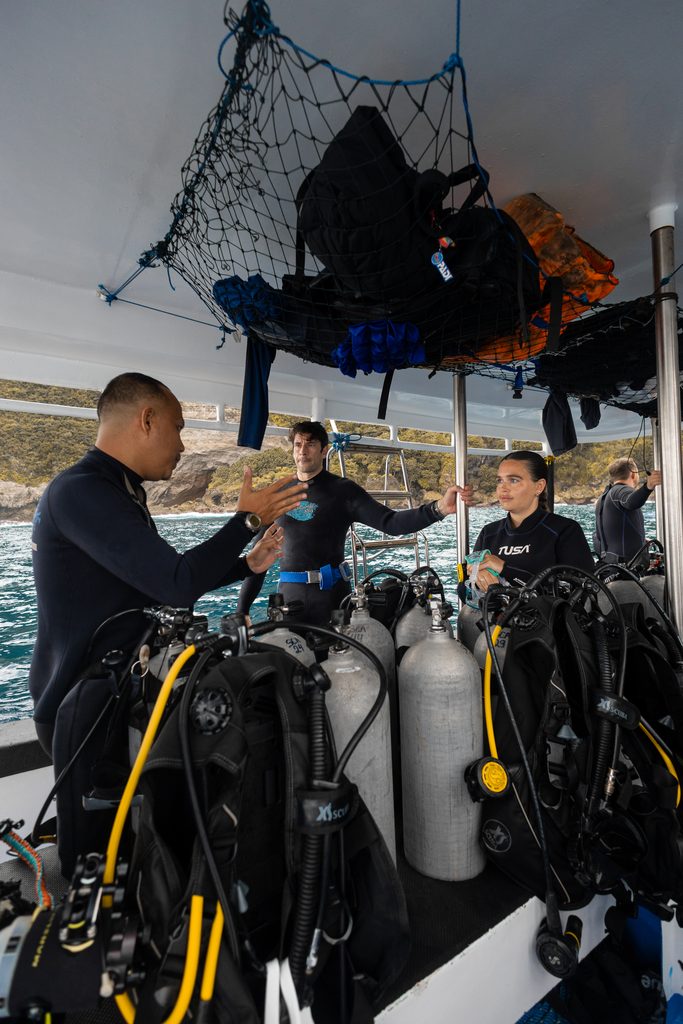
That is often because small problems are being noticed before they become big ones.
Experience Is Not About Proving How Much Current You Can Handle
There is still a culture in diving that celebrates the professional who will dive anywhere.
Strong current? No problem.
Big swell? Let’s go.
Challenging conditions? Follow me.
It can look experienced. But confidence and judgement are not the same thing.
Good professionals know when to change the plan
Experience should make a dive professional more selective, not more reckless. The right question is never:
“Can I handle this?”
It is:
“Is this appropriate for the divers I am responsible for today?”
Sometimes the most professional decision is the least exciting one. And it can be about changing the dive site, ending the dive, or not going out at all that day.
A Certification Card Does Not Tell the Whole Story
Two divers with the same certification can have completely different levels of comfort underwater. One may have 100 recent dives in current. Another may have completed ten dives and not been underwater for two years. That is why good dive centers ask questions like:
How confident do you actually feel?
We strongly advise you to answer that question honestly. If your last dive indeed has been a while, a refresher is not a step backwards.
It is about preparation, your safety, the guides safety and other dive buddies that are diving with you in the group.
Our scuba refresher gives divers the chance to reset their skills and confidence in the pool before entering the Marine Park.
Most Diver-Related Emergencies Start Small
Dive accidents are rarely caused by one dramatic moment.
More often, they develop as a chain of smaller problems. A diver may become anxious, start breathing faster, use more gas, and lose control of their buoyancy. The group can become separated, stress increases, and suddenly a manageable situation becomes an emergency. Divers Alert Network discusses this pattern in its research on the accident chain in Diver Safety.
Good safety management is about interrupting that chain as early as possible. It starts with a good dive professional who prioritises a good judgment call and the honesty of the diver. If a diver looks uncomfortable, notice it. If someone is struggling with buoyancy, slow down and address it. If conditions are stronger than expected, change the plan. And if somebody does not feel well, never pressure them to dive.
Often, the best rescue is the emergency that was prevented before it had the chance to develop.
Seven Questions to Ask Before Choosing a Dive Center
If you are a certified diver and only diving once or twice a year during your vacation, ask the following safety questions before you choose your dive center to go diving with:
- How many divers are in one group?
- How do you choose the dive site for the day?
- What happens if conditions are not suitable?
- How do you group divers with different experience levels?
- Do you carry emergency oxygen and first-aid equipment?
- What do you recommend if I have not dived recently?
- Can the guide change or cancel the dive?
You do not need impressive answers. You need thoughtful ones.
The Cheapest Dive Is Not Always the Best-Value Dive Choice
Online, many dive trips look almost identical. But you are also paying for things that are much harder to see. The knowledge, supervision, expertise of the diving team, surface support, emergency planning, decision-making, and professional judgement.
Most importantly, you trust someone to make the right decision, even when that decision might disappoint you.
That is difficult to put into a price list.
Underwater, it matters enormously.
Nusa Penida Marine Park Deserves Respect, Not Fear
The message here is not:
Don’t dive Nusa Penida.
Quite the opposite.
The Nusa Penida Marine Protected Area offers extraordinary diving. The reefs, currents, Mantas, molas, and marine life are exactly what make this place so special. But incredible diving and responsible diving should never be separated.
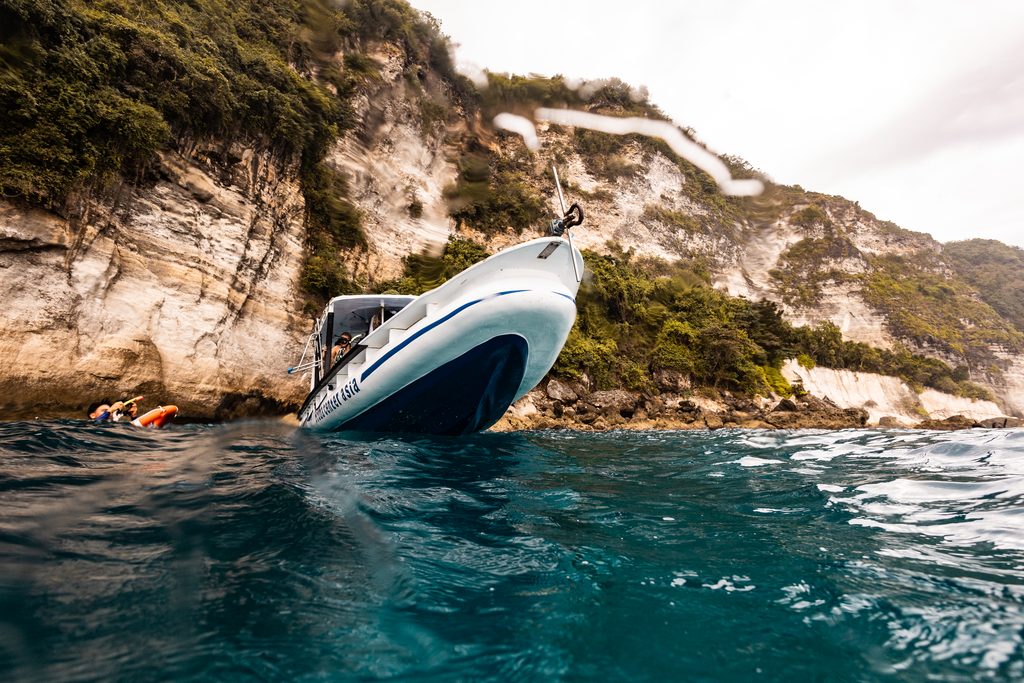
You do not need to fear the ocean. You need to respect it.
Understand your own limits and prepare yourself properly. Do not lie about any medical background issues, even if they seem small.
And choose professionals who are comfortable respecting theirs. Because the best dive professional is not the one who will always get you underwater.
It is the one you trust to know when you shouldn’t go in.